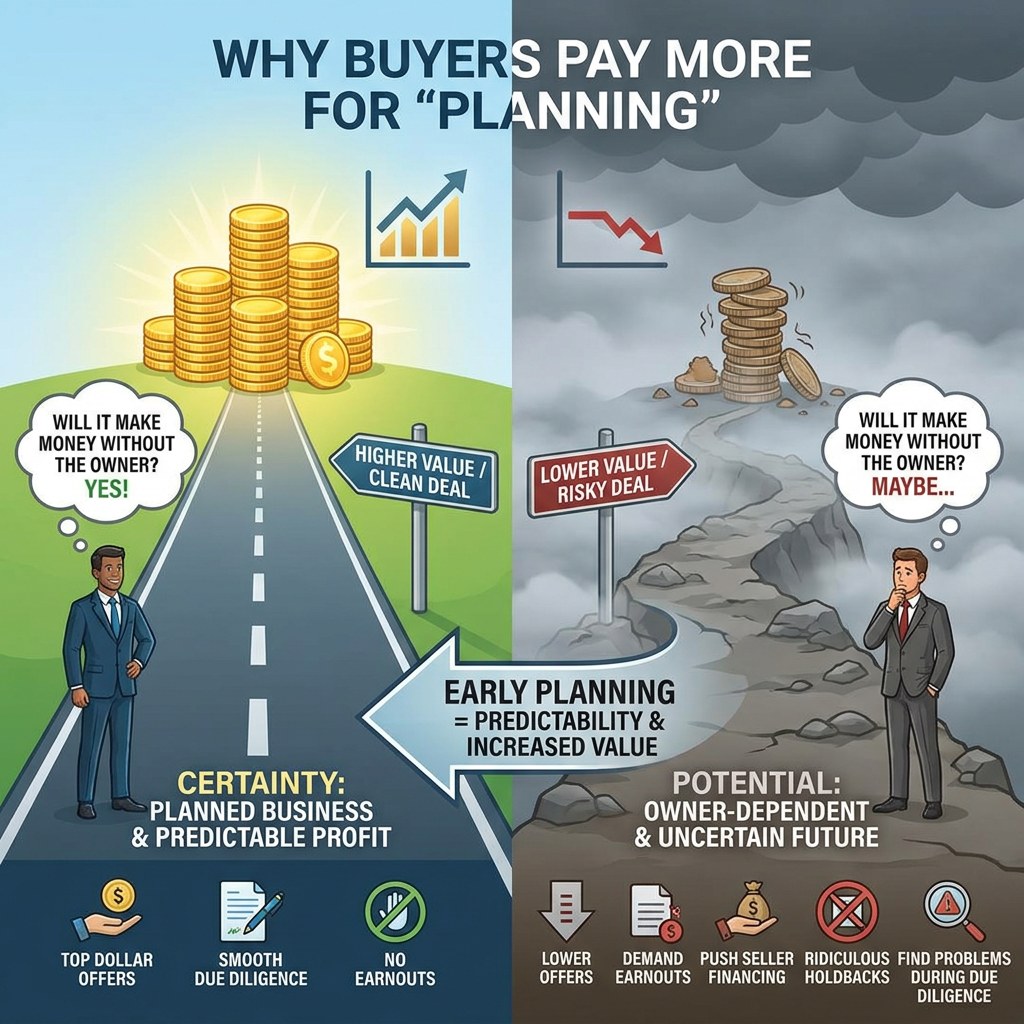
In short: Buyers pay more for certainty, not potential. The question every buyer asks is whether the business will keep making money without the owner. When the answer is “maybe,” buyers lower offers and push for earnouts, seller financing, and holdbacks. Planning ahead makes your business predictable — and predictable businesses earn higher prices.
Buyers don't pay more for “potential.” They pay more for certainty.
Let's make this simple and sum up the buyer's logic in one sentence:
“If I buy this business, will it keep making money without the owner?”
If the answer is maybe, buyers get nervous — and nervous buyers don't pay top dollar.
- Lower offers
- Demand earnouts
- Push seller financing
- Request ridiculous holdbacks
- “Find problems” during due diligence
They become… creative. And you want to avoid that.
That's why early planning increases value — because it makes the business more predictable.
Go deeper: Learn more about how buyers value a business — SDE, EBITDA, and the drivers that move the multiple.
What makes a business predictable to buyers
- Clean, verifiable financials
- Recurring or repeat revenue
- Customers spread across many accounts
- A management team that runs the day-to-day
- Documented processes
- Solid customer and vendor contracts
Check how your business stacks up with the Sellability Score, and start with the most common gap: owner dependency.
Common questions
Why do buyers pay more for some businesses than others?
Because they’re buying future cash flow. A business with clean financials, steady revenue, diverse customers, and a team that runs without the owner is more certain — and buyers pay more for certainty.
What are earnouts and holdbacks?
An earnout ties part of the purchase price to the business hitting future targets. A holdback withholds part of the price after closing to cover problems found later. Both shift risk back to the seller.
How can I increase my business’s value before selling?
Make it predictable: clean up financials, reduce owner dependency and customer concentration, document processes, strengthen contracts, and build a management team — ideally 12–24 months before you sell.